Showing posts with label Yak Safari. Show all posts

Saturday, November 11, 2017

Fascinating Pakistan - Shimshal Pass

I just started writing a series of posts yesterday to introduce to the world the fascinating,beautiful and awe inspiring beauty and landscape of Pakistan. This post today is the second in the series of many more yet to come.
Shimshal Village

Now my readers ma ask why Shimshal Pass - a place rather unknown in the tourism annals of Pakistan. Well I picked up this place for four reasons:
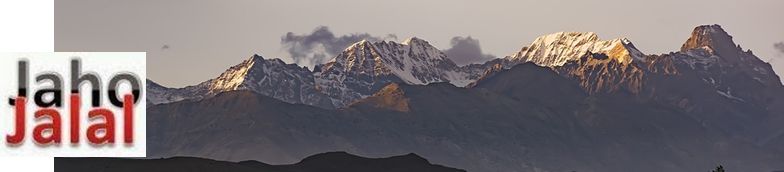
  • The photo above was the main motivating factor as the composition is so captivating that I was awe stricken for a while. It looked as if I saw something from another world. Just look above again - doesn't it instantly attracts you - specially the bunch of yaks running at the foothills of mighty mountain? Well it did for me and I instantly thought of writing about Shimshal Pass and the Shimshal Valley. 
  • Secondly the motivation of the people of Shimshal village to come out of the obscurity from an otherwise obscured small village surrounded by rugged stony mountains, cutting them completely from the Hunza Valley just next to the Shimshal Valley, but inaccessible except for foot or mule mode of transportation. They thus started cutting the mountains and made a jeep able track to reach the Karakoram Highway (KKH) near the Passu - it took them Eighteen years (1985-2003) to build this track completely relying on their muscle power without any outside help.
  • And lastly the trekking on the Shimshal Pass - from the Shimshal village located at 3,100 metres above sea level to Shimshal Pass at 4,735 metres. The invincibility of the trek at places almost vertical climbs, wading through gushing mountain gorges and fast flowing streams.
  • And lastly, the entire Shimshal village has electricity - yes don't be surprised and thanks to the solar technology. All houses have solar panels to provide them uninterrupted power supply and watch TV through satellite receivers/dish antennas. This initiative on the part of locals should serve as any eye opener for many villages of northern areas to follow suit.
Now back to the Shimshal village, which is the jump off point for the Shimshal Pass. The village is part of the Gojal Tehsil of Hunza District, in the Gilgit–Baltistan province of Pakistan. At 3,100 m above sea level, it is the highest settlement in Hunza Valley. The village is closest to China. As are typical helmets of high altitude, it has just over 200 houses with a population of approximately two thousand.

With the development of the over 60 kilometers long jeep-able track from the Passu to Shimshal, due courtesy the Agha Khan foundation, the Government of Pakistan and the sheer hard work of the locals, it now takes 2-3 hours to reach this beautiful village perched in the  lush green Shimshal Valley with yaks and goats roaming freely and even racing. The track is one of the dangerous as described by the blog Dangerousroads:
The Shimshal Valley Road is a spectacular and terrific curvy mountainous road which rarely permit speeds over 10km/h. Located in Gojal, Hunza–Nagar District in the Pakistan-administered Gilgit-Baltistan formerly known as Northern Areas of Pakistan, the journey is extremely dangerous.
Beside very healthy goats and sheep, the main attraction of Shimshal is the Yak, a fierce looking shaggy creature, also found in other higher planes of northern areas of Pakistan. These typically local animals are used as a source of milk, beef, wools and carrying the loads to the mountains in the high pastures and also for crossing through fast current streams and rivers.
Yak Safari - Photo Courtesy Travel Blog

Those who are not avid trekkers, yaks provide them a fantastic opportunity for yak safari to close by areas on the Shimshal Pass. The best time for yak safari is from  June to October but the best is in September to October. The yak safari commences from Shimshal village to  Zardgarben, 3,810 m taking 5-6 hours. You may continue to resume the safari next day to Purien-e-ben, 3,322 m taking hours. Still going higher, one may resume the safari next day to Shuijerab, 4,080 m for 6-7 hours and camping and returning to Shimshal the next day.  

The yak race is another attraction of the area, which is an annual feature when one can see the locals mounted on yaks wading through river streams and lush green fields. This annual feature is held in the last week of July or the first week of August.


As for Shimshal Pass, it lies on the watershed between the Indus River and Tarim River basins, and leads to the valley of the Shimshal Braldu River, a tributary of the Shaksgam River on the border with China. Francis Younghusband was probably the first Englishman to reach the pass (1889).

Trekking from Shimshal  village to the Shimshal  Pass trek is treacherous and deadly, yet adventurous. The trek becomes unsteady with falling rocks and lose stones under your feet. Sometimes one slides on the lose stones, which may become dangerous as the stones once set into motion continue to trigger down from behind too.
It is the sheer determination of the young men of Pakistan and even abroad who venture into this otherwise unspoiled area and take up trekking through Shimshal Pass. Amid howling winds cutting through one's body and loneliness of the mountain trek makes the trekking more difficult - and rather scary.
Words alone cannot explain the toughness of trekking  - Watch video of trekking up to the Shimshal Pass and commend the efforts of these trekkers who opt to reach the Shimshal top disregarding dangers and invincibility of the trek. En route one has to wade through fast mountainous streams with water so clod that cuts through one's skin.

The video above was made when the Atta-abad Lakes had to be crossed through ferries as the KKH was submerged underneath. Now an alternate route has been made to connect the two missing ends of KKH and one can move on the road. However, for adventure sake, one can still opt for a ferry ride in the lake.

I am sure this post will made you make an endeavour to go trekking in the Shimshal Pass and enjoy the experience for many years to come. And you would love to explore more of the fascinating Pakistan. I will help you explore more.

Read more about Yak Safari Photo Shimshal Pass/Village courtesy Mobeen Mazhar | References: Wikipedia |
If you like Jaho Jalal, please follow us on Facebook

Sunday, March 17, 2013

Yak (Cow with a Skirt) Safari in Pakistan

Yak in Pakistan's northern areas [Photo Credit: Heavenly Beauty of Pakistan]

You may laugh out at the title of the post - but Yak with hits heavy hanging coat is just like a cow with a skirt to protect herself form the harsh winters where this huge and majestic animal belongs to.

Yak, which is closely related to the African buffalo, the American bison, and the European bison, is found on the rooftop of the world - an area spread from Tibet, Nepal, India  Pakistan's northern areas, Xinjiang region of China and Wakhan corridor of Afghanistan, where snow governs the mountains almost the year round. With temperatures generally ranging in the sub-zero bracket, no animal can survive the rigors of the weather and harshness of the terrain but Yaks.

Living on altitude between 4,000 and 6,000 meters (13,000 to 19,600 ft), Yak is considered an endangered species.


Yaks in Pakistan’s Himalayas  [Photo Credit: BucketRipper/Coen Wubbles]

In Pakistan, yaks are found in the Himalayan and Karakoram mountain ranges. Their large herds are found in the Shimshal valley in the Khunjrab National Park, an area northeast of Gilgit bordering China. Beside these are found in Passu, Nagir and Baltistan. Yaks are also found in the Broghil Valley, Chitral. Shimshal is ideal breeding ground of the yaks as it is located at an altitude of 3, 108 metres.

Yaks in Pakistan [Photo Credit: Basharat Ali]

Yak is an excellent beast of burden and transportation in the snow frozen areas - it is its capacity to live in these hostile sub zero environment that Chinese historians argue that without yaks, human civilization would not have survived in the remote mountainous regions on the world's rooftop.

Me and Yaks at 4700 m

Yaks at Khunjrab Pass on Pak-China border of north Pakistan, at 4700 m from sea level. [Photo Credit: Imran the Trekker / Flickr]

Beside being called Cow in the Skirt, yak is also known as the mountain ship the same way camel is called the desert ship. 

Yak Safari in Shimshal Valley [Photo Credit: ActiveTours Pakistan]

The people of the northern areas of Pakistan have engaged yaks in promoting tourism in the area in what is called the 'Yak Safari.' Every year tourists go to the the yak-specific areas to enjoy this unique and different safari. Many tour operators provide well planned tours to the northern areas, which include a daily Yak Safari to various places in the Shimshal valley.


Now a few words about Yak itself:

Yaks, due to their heavy fur, are only adapted to high altitudes, and cannot sustain themselves at altitudes lower than 10,000 feet. even its blood cells are naturally designed for high altitudes - half the size of the cattle and three times more in number - this specialty allows increases blood capacity to carry more oxygen. The heavy fur coat can sustain the animal in temperatures as harsh and severe as -40 Celsius.


A Yak in Broghil Valley, Chitral [Photo Credit: Native Pakistan]

Yak grazes on grass, herbs and lichens. In winters it would eat poor coarse grass, leaves and twigs. Since water is generally scarce at these altitude, a thirty yak chews the frozen snow as a substitute for water. As for grass, yaks will dig in the snow until they find grass to eat. Sometimes a yak will dig a yard down in the snow until grass appears.

Yak is a life life to people where it is found. Its every part of the body is made use of when it is killed so as not to waste it away as killing of a yak deliberately is almost a sin in Tibet.


Yak Cleaning
A masterpiece shot of Yak birth, Tibet China [Photo Credit: Kari Liabat / Flicker]

The killed yak's horns are used for draining blood and cutting meat, beside being used as decorations. The head of a yak is dried and served at New Year's celebrations. The fur of a yak, which can grow to be two feet long on the torso, is used to make ropes, clothing, slings, sacks, and even tents. Yak fur tents are warmer than canvas tents and hold up much better under intense winds. The yak fur allows smoke inside the tent to escape, while the oils in the fur keeps water from penetrating inside. Underneath the fur is wool which is used for clothing and boots. Even the tail of the yak has been used as healing aids.

Climbing with yaks in Mount Everest [Photo Credit: FR2DAY]

The milk of a yak (female yak is called 'dri' in local Tibetan language) contains twice as much fat as the milk from normal domestic cows. The yak milk is  golden in color and is rarely drunk. Instead is used for yogurt and butter. The yak butter is used  in tea, as a face lotion, and as fuel for lamps. Yak-butter tea is steadily consumed by Tibetan nomads—up to 40 cups a day. This consists of black tea churned with yak-butter instead of milk—definitely an acquired taste.

All Photos above have been duly attributed to the source
Tours Operators in Pakistan for Yak Safari: | Hunza Guides | Active Tours |
If you like Jaho Jalal, please follow us on Facebook